
July 30, 2026 by Beyond GM
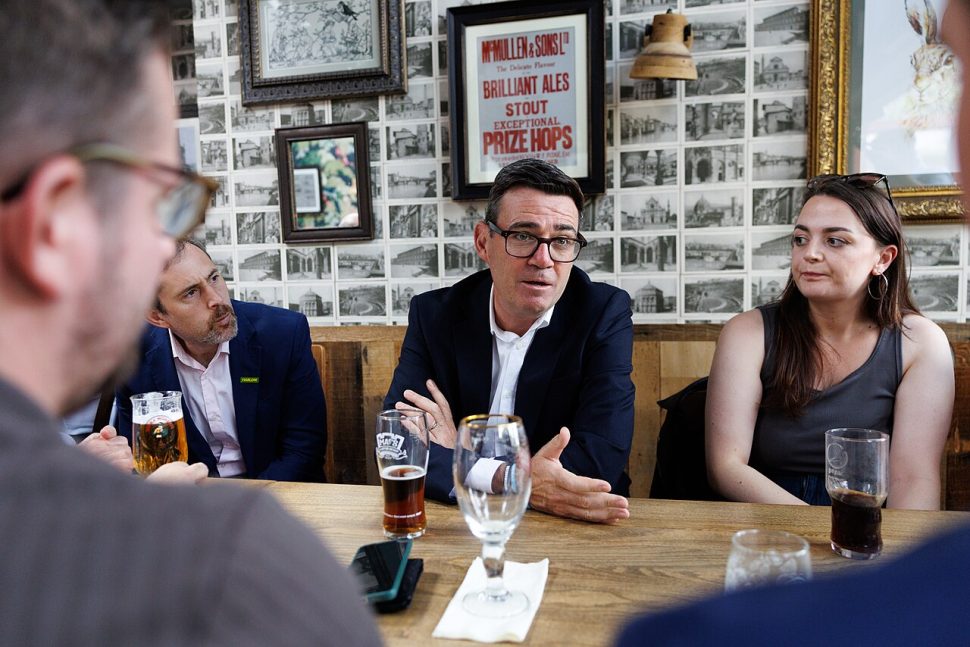
In a letter to new Prime Minister, Andy Burnham, Beyond GM argues that emerging technologies must be judged against their public value – and calls for citizens and independent public-interest experts to be involved before policy decisions are made.
Beyond GM’s letter, sent today, is calling on his Government to adopt food sufficiency as the guiding principle for national food and farming policy. Burnham became Prime Minister on 20 July 2026.
The letter, copied to the new Secretary of State for Environment, Food and Rural Affairs, Dame Angela Eagle, warns against using genetic engineering and engineering biology as substitutes for addressing the underlying causes of problems in food, farming, public health and the environment. Eagle returned to Defra as Secretary of State, from her former position as Farming Minister, on 20 July.
It argues that technological novelty, commercial investment and the creation of patented products are not in themselves evidence of public value. Instead, technologies should be assessed against credible alternatives and their wider effects on farmers, citizens, ecosystems and democratic accountability.
The letter also argues for transparency about what these emerging technologies are, how and why they are being used and how they are regulated and calls for greater support for organic and farmer-led systems and challenges the exclusion of both technology questions and independent expertise from current food-policy dialogues.
Beyond GM Director Pat Thomas said: “The new Government has an opportunity to decide what our food system is actually for. Food policy should begin with ensuring that everyone can access enough nutritious and affordable food – not with finding markets for whichever technologies attract the most investment.”
The letter follows in full below.
Dear Prime Minister,
May I begin by congratulating you on your appointment as Prime Minister. I am writing to introduce my organisation and to draw your attention to an issue that we believe will require early consideration by your government.
Beyond GM is a UK civil-society organisation working to ensure that decisions about genetic technologies in food and farming are transparent, accountable and grounded in the public interest. Our wider concern, however, is the kind of food system these technologies are being used to build – and whether it can provide healthy food, viable farming and ecological resilience for everyone.
You inherit a food and farming system of daunting complexity. Farmers are under severe economic pressure. Poor diets are contributing to profound inequalities in health. Nature and soils are being depleted.
The scale and interconnectedness of these problems can cause governments to preserve production systems long past their sell-by date, or reach for technological interventions that promise change while allowing the underlying system to remain the same.
Genetic engineering, and the broader field of engineering biology, are increasingly presented in this way. Climate vulnerability becomes a search for an engineered trait. Livestock disease becomes a problem with the animal rather than the conditions in which animals are bred and kept. Poor nutrition becomes an opportunity to create new engineered and/or highly processed food products rather than confronting the forces shaping people’s diets.
These technologies attract investment because they can generate patents, proprietary products and new commercial platforms. They attract political support because they give the appearance of action. But investment is not evidence of public value. A pipeline of patented products is not a food strategy. And technological novelty is not the same as progress.
The language of food security has become so expansive that it can now be used to justify almost any intervention promising greater production, faster innovation or more resilient supply chains. Yet a country can produce food abundantly while leaving millions unable to afford a healthy diet. Its largest companies can be commercially secure while farmers, citizens and ecosystems bear the costs.
The test of resilience is not whether one crop, company or technology can survive the next shock, but whether the food system as a whole can continue providing everyone with enough nutritious food. We believe your government should begin, instead, from the principle of food sufficiency.
Food sufficiency means ensuring that everyone has reliable access to enough nutritious, appropriate and affordable food to thrive, while protecting the land, nature, skills and livelihoods on which future provision depends.
The first question is not simply how much Britain can produce, but enough of what, for whom, by what means and at whose expense. It places citizens, rather than aggregate production or corporate growth, at the centre of food policy.
Crucially, a sufficient food system must work in good times and bad. It must contain the reserves, adaptability and redundancy to continue meeting people’s needs through future shocks. That means maintaining diversity in crops, livestock and supply routes; rebuilding regional processing and storage; retaining practical skills and productive land.
Rather than ‘betting the farm’ on uncertain future possibilities, we should prioritise protecting and building on what is already delivering benefits.
Organic farming is the most established example we have of a standards-based approach to environmentally responsible agriculture operating at significant scale. It demonstrates that change can be driven through agreed principles and whole-system standards rather than individual technological products.
A government serious about food sufficiency should be investing in and helping such systems grow, learn and improve – not inadvertently undermining them through regulatory choices made to accommodate newer and more speculative technologies. That means ensuring that organic farmers and producers retain the information, traceability and protections they need.
A food sufficiency perspective also provides a clear public purpose against which technologies and investments can be judged. Genetic engineering and engineering biology should not be treated as the default frontier of agricultural progress while farmer-led innovation, agroecology, conventional and participatory breeding, crop diversity, soil restoration and regional food infrastructure remain comparatively neglected.
Claims made for emerging technologies should be tested rather than turned into sales pitches. Transparency about what these technologies are, how and why they are being used, and how they are regulated is essential to building and sustaining public trust. Likewise, an honest discussion about risks and benefits is fundamental to public confidence.
In setting priorities, we must ask: Does an intervention help provide nutritious food to those who need it? Does it strengthen the autonomy of farmers and communities? Does it restore the ecological foundations of food production? Does it disperse power or concentrate it? Does it address the cause of a problem or merely produce an investable response to one of its symptoms?
Genetic engineering and other agritech solutions should be judged by these standards. Some applications may prove useful. But usefulness must be demonstrated against credible alternatives, possible harms and the wider system into which a technology will be introduced.
We have participated in several public dialogues on food technology, including some funded by UKRI. What we see time and again is that public views are thoughtful and nuanced – the very qualities missing from current policy dialogues. Those voices must be heard.
Those developing and investing in emerging technologies will inevitably advocate for their benefits. But government must also hear from independent public-interest experts examining how these technologies interact with farming systems, markets, regulation and democratic accountability.
Current food policy dialogues not only sidestep the technology question; they also exclude organisations such as Beyond GM, which bring years of experience and independent expertise in precisely this space.
We should not be brought in after policy directions have been settled, simply to respond to – or contest – predetermined proposals. Public-interest expertise must help frame the questions, assess the alternatives and shape decisions from the outset.
We would welcome the opportunity to meet you and your advisers to discuss how food sufficiency could provide a clearer foundation for national food and farming policy – and how innovation might be governed in service of that purpose rather than allowed to define it.
Britain does not need techno-food standing in for political courage. It needs a government prepared to decide what its food system is for.
From A Bigger Conversation
Digital agriculture is often sold as inevitable progress, but behind the "cloud" lie corpo…
From A Bigger Conversation
The use of artificial intelligence tools is among the top emerging issues in biodiversity…
From A Bigger Conversation
The future of cultivated meat will not be decided my marketing, PR or technical approval a…
From A Bigger Conversation
When we use conservation biotechnology to alter species so they can live in the world we h…

Share this page
share using:
Or copy and paste this page address:
https://beyond-gm.org/beyond-gm-to-andy-burnham-put-food-sufficiency-at-heart-of-food-policy/