September 21, 2026 by Beyond GM
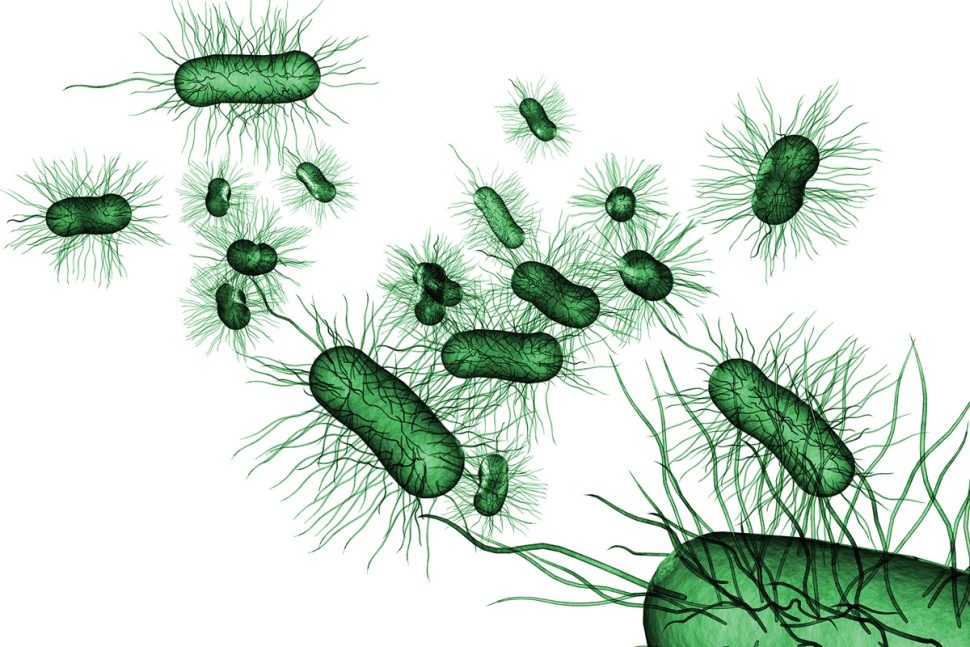
Following the EU’s adoption of the European Commission’s proposal to weaken the regulations around new GM plants, the Commission now wants to do the same with genetically modified microorganisms (GMM).
Now a group of ecologists has written a detailed report laying out why that’s a terrible idea.
The ecologists represent the working group on new genomic techniques of the Ecological Society of Germany, Austria and Switzerland (GFÖ) and the working group of the Pan-European Working Group on Environmental Release of GMOs of the European Ecological Federation (EEF).
In their report, the ecologists write: “Microbes are fundamentally different from plants and animals in ways that make current or loosened regulatory approaches inappropriate and potentially dangerous. We also lack sufficient scientific knowledge about identity and ecology of microbes.” They warn about “the impossibility of removing GMMs once they are applied”.
The ecologists want certain assumptions to be removed from the Commission’s proposal – namely that there is a “low-risk” category of microbes and that a “Qualified Presumption of Safety” (QPS) can be made for these organisms. Under the proposal, these assumptions would be used to justify weakening or abolishing the risk assessment for a GMM.
Perhaps in recognition of the scientific and legal indefensibility of the “low-risk” assumption when it comes to GM microbes, the Council of the EU has changed the term to “GMMs eligible for an expedited procedure”. Different name, maybe reduced legal liability, but the same dangerous deception.
The Commission proposal weakens the requirements of Directive 2001/18/EC, which governs the deliberate release into the environment of GMOs. The proposal doesn’t apply to food and feed, but products such as biofertilisers, biopesticides, and bioremediation agents for toxic and polluted sites.
While the EU has some experience with commercial GM plants, it has never authorised the placing on the market of GMMs. So far, only experimental releases have occurred. Nevertheless, the Commission makes the following proposals to lower the existing regulatory requirements for the deliberate release of GMMs into open ecosystems:
In addition, the Commission proposes a new category of “low-risk GMMs”, based on EFSA’s concept of “Qualified Presumption of Safety” (a fast-track risk assessment system used to decide if specific microorganisms are safe for use in food, feed, and other regulated products) and “an absence of genes of concern not naturally present in the parental organism”. For these “low-risk GMMs”, two basic GMO requirements would be further reduced:
In demanding the removal of the “low-risk” and QPS designations, the ecologists say: “There is currently no comprehensive framework for quantifying GMM-associated risks across all microbial taxa, genetic locations of modifications, and types of modifications. This is aggravated by the availability of new genomic techniques and AI, which may rapidly yield new GMMs with modifications unrelated to ‘genes of concern’ which create entirely novel and unknown environmental functions and risks.”
On the supposed low-risk criterion of the “absence of genes of concern not naturally present in the parental organism”, the ecologists say: “microbial strains within species differ largely and parental traits do not inform about environmental risks of the GMM”.
In a quote published by the Science Media Centre Spain, Katja Tielbörger, Professor of Plant Ecology at the University of Tübingen (Germany) and the spokesperson for the ecologists’ report, said a major problem with the Commission’s proposal is that “it has been inspired by little scientific evidence, and with no consultation of ecology researchers. Considering that ecologists are the experts in the study of the interactions of organisms with the environment, this oversight compromises the scientific credibility of the proposal. Namely, many statements in the proposal about both benefits and risks of GMM release are based on belief instead of sound scientific evidence.”
Accordingly, in their report, the ecologists ask that the EU institutions “Consult ecologists and microbiologists formally before regulatory changes proceed”. They say the absence of such consultations in the past are a main reason why most GMM products developed thus far have “failed”.
Prof Tielbörger also told the Science Media Centre that the postulated benefits of GMMs for agriculture “are not weighed against the backdrop of myriads of studies suggesting highly effective solutions to adverse environmental effects of intensive agriculture, such as diversification. Instead, from a scientific point of view, the proposal may yield many potential environmental risks.”
She added: “Where the existing directive takes full account of the dearly needed precautionary principle, the proposed changes may create major environmental risks. These include the alterations of the microbiome of other organisms, including humans, changes of complex biotic interaction networks of the rhizosphere, displacement of native microbes, endangerment of local microbial diversity before it is even described, reduced resistance and resilience to future environmental change, and cascading effects to higher trophic levels.
“GMMs will evolve fast, interact with a multitude of other organisms, will be difficult to trace, and cannot be called back. With billions of microbes in soils and microbiomes of ‘higher’ taxa, GMM release also affects plants, animals, humans, and non-target microbes which, under the proposed changes, may not even be monitored. This makes GMMs a moving target for environmental assessments, suggesting much more strict regulation of GMM release than for all other organisms.
“Overall, GMM should not be released into the environment without scientifically sound, case-by-case risk assessment. They must be traceable, release should be strictly time-limited, and effects re-evaluated regularly. Ecologists must be involved in both developing, as well as conducting scientifically sound and reliable approaches for GMM risk and benefit assessments.”
Behind the push for GMM deregulation are big agrichemical and seed companies like BASF, who want to add GMM products to their pesticide portfolio, joining forces with companies that currently use GMMs in ‘contained use’ applications, such as Evonik and Pfizer (Germany) and Novozymes/Novonesis (Denmark).
Joining the drive are industry lobby groups like EuropaBio, CropLife Europe, the Association of Manufacturers and Formulators of Enzyme Products (AMFEP) and the EU Association of Specialty Feed Ingredients and their Mixtures (FEFANA).
While the use of GM microorganisms in agriculture is still rare, according to Friends of the Earth USA, the entrance of the four multinationals Bayer-Monsanto, Syngenta, Corteva and BASF into the ‘biologicals’ market could mark a turning point. These companies “have spent millions acquiring biologicals companies in recent years…. The global biologicals market is expected to nearly triple in a span of eight years… to 29.31 billion dollars by 2029.” Friends of the Earth gives the example of Bayer, which, armed with a “collection of at least 125,000 wild microbial strains”, launched a partnership in 2022 with Ginkgo Bioworks, “a startup company which has received 15 billion dollars in investment to develop a platform to automate the genetic engineering of thousands of microbes at once”.
Beyond GM says: The UK has not deregulated genetically modified microorganisms. Most GMMs remain subject to existing GMO laws, which distinguish sharply between contained use and deliberate environmental release.
GMMs may be used in laboratories and industrial production under the Genetically Modified Organisms (Contained Use) Regulations 2014. These require risk assessment, appropriate containment and, for specified activities, notification to the Health and Safety Executive. Permission for contained use is not permission to release a living GMM into the environment.
In England, anyone wishing to release a GMM or place it on the market must follow Part VI of the Environmental Protection Act 1990 and the Genetically Modified Organisms (Deliberate Release) Regulations 2002. This requires an environmental risk assessment, prescribed information and prior consent. Scotland and Wales have their own parallel GMO controls, while Northern Ireland continues to apply relevant EU GMO law.
The Genetic Technology (Precision Breeding) Act 2023 effectively creates a deregulatory regime in England for certain gene-edited plants and animals, although it is currently operational only for plants. Most microorganisms – including bacteria, fungi and viruses – fall outside the Act because its legal definitions are limited to particular biological groups classified as plants or animals. A few types of single-celled algae might qualify, depending on their precise classification.
Could this change? Potentially. GMO legislation is expected to fall within the scope of the proposed UK–EU sanitary and phytosanitary agreement, while the Precision Breeding Act is currently outside it. But whether the EU’s proposed GMM provisions would be included, wholly or partly, remains unclear. In addition, while developers and politicians are enthusiastic about deregulating the widest possible spread of gene-edited organisms, alignment would not automatically bring microorganisms within the Precision Breeding Act. That would still require Parliament to amend primary legislation or establish a new statutory regime.
This article originally appeared at GMWatch – we are grateful for their permission to republish it with our own additional material on the UK situation.
Further information
From A Bigger Conversation
Digital agriculture is often sold as inevitable progress, but behind the "cloud" lie corpo…
From A Bigger Conversation
The use of artificial intelligence tools is among the top emerging issues in biodiversity…
From A Bigger Conversation
The future of cultivated meat will not be decided my marketing, PR or technical approval a…
From A Bigger Conversation
When we use conservation biotechnology to alter species so they can live in the world we h…

Share this page
share using:
Or copy and paste this page address:
https://beyond-gm.org/eu-deregulation-gm-microorganisms/