
January 4, 2026 by Beyond GM
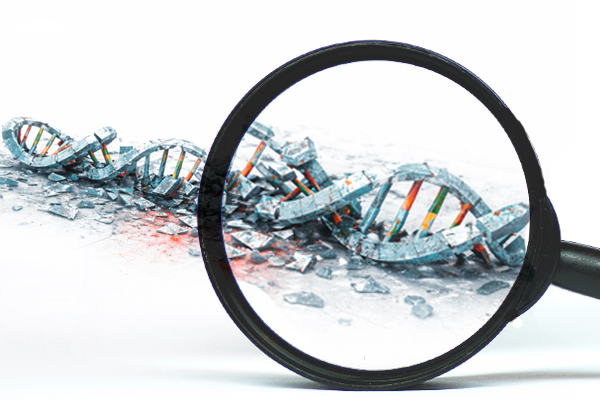
New evidence has identified a previously unknown way in which gene editing can cause long-lasting impairments of genome function, even when DNA sequence damage is fully repaired.
The findings of the peer-reviewed study, published in the journal Science, challenge the assumption – now embedded in UK regulatory policy – that precise gene edits are inherently safe provided they do not introduce foreign DNA or obvious off-target mutations.
The UK’s post-Brexit regulatory trajectory treats many gene-edited (so-called ‘precision bred’) GMO organisms as essentially equivalent to those produced by conventional breeding. Safety assessments are being reduced or removed on the basis that gene editing creates only small, targeted changes to DNA sequences that are indistinguishable from conventional breeding.
However, the new study suggests that gene editing can have broader and more persistent biological effects that are not detectable by DNA sequencing alone. These effects arise not from unintended “off-target” mutations, but from the process of breaking and repairing DNA itself – the central mechanism of gene editing. According to an in depth analysis of the study at GM Watch, this raises fundamental questions about whether current risk assessment approaches are scientifically adequate.
The researchers behind the study examined whether genome organisation fully recovers after DNA double-strand breaks, the central mechanism used in gene editing. Their focus was on chromatin, the complex three-dimensional structure formed by DNA and associated proteins that plays a key role in regulating gene behaviour, and how it is affected after gene editing-induced breaks are repaired.
The researchers found that although the breaks were successfully rejoined, chromatin structure did not return to its original state. Instead, large chromatin neighbourhoods surrounding the break site remained persistently misfolded, showing long-lasting disruption to the genome’s three-dimensional organisation.
These structural changes were accompanied by durable reductions in gene expression affecting multiple genes within the same chromatin domain – not just the targeted gene.
Crucially, the altered chromatin state and impaired gene activity persisted through several rounds of cell division, meaning that daughter cells inherited the disruption. The authors describe this phenomenon as “chromatin fatigue”: a lasting impairment of genome function caused by DNA breakage and repair, even when DNA sequence integrity is fully restored.
In their conclusion, the researchers describe chromatin fatigue as a previously unrecognised consequence of DNA damage, with implications for ageing, disease, and genome editing technologies such as CRISPR.
Although the study was conducted in human cells and framed in the context of human gene therapy, the biological processes involved are not human-specific. Chromatin structure, gene regulation, and DNA repair mechanisms are fundamentally shared across plants and animals. It is therefore likely that similar epigenetic disruptions could occur in gene-edited plants and animals.
The significance of chromatin fatigue lies in the fact that it represents a qualitatively different kind of unintended effect from those typically considered in gene editing risk assessments.
Rather than being rare, random and detectable through DNA sequencing, these effects are intrinsic to the gene editing process and on-target (i.e. arising on or near the edited site, not elsewhere at the genome). They are also epigenetic, affecting gene regulation rather than DNA sequence.
Disruption to chromatin structure and gene regulation has the potential to alter biological function in multiple ways. Such changes could modify levels of toxins or allergens, alter the nutritional value or give rise to other unintended physiological effects – such as developmental abnormalities or disease.
A key argument in favour of deregulation is that gene editing tools are becoming ever more precise. However, additional risks posed by chromatin fatigue remain even if gene editing technology advances to the point where the edit can be targeted precisely.
This is because chromatin fatigue is an on-target effect, occurring within the chromatin domain around the targeted edit site as an inevitable result of the intended DNA repair. As such, it cannot be avoided by using “improved” gene editing techniques.
The authors state in their paper that DNA double-strand breaks can be caused by environmental stresses as well as by gene editing, though they do not demonstrate this or specify the types of stresses involved.
Closer examination suggests that the kinds of environmental stresses capable of producing double-strand DNA breaks would rarely occur in nature, if at all, and would typically arise only under extreme and potentially catastrophic circumstances. Examples include exposure to mutagenic chemicals or ionising radiation from X-rays, nuclear accidents, or radioactive elements such as uranium. While radioactive elements occur naturally, exposure levels are generally low. The same applies to mutagenic chemicals.
Mutations arising from DNA damage can contribute to useful genetic variation. However, it emphasises that such mutations are normally subject to natural selection over long evolutionary timescales, during which harmful changes are eliminated and beneficial ones may persist.
This evolutionary filtering is a crucial safeguard in natural systems. By contrast, gene-edited organisms are typically developed and released in large numbers and over very short timeframes, particularly in agriculture. As a result, any unintended genetic or epigenetic changes introduced through gene editing are not exposed to the same long periods of selection that would normally limit the spread of harmful traits in nature.
Supporters of gene editing often argue that mutagenesis breeding is part of conventional breeding and therefore that similar risks already exist in agriculture. However, this comparison is misleading.
Mutagenesis breeding involves deliberately exposing plants to high doses of mutagenic chemicals or ionising radiation to induce large numbers of random mutations, including double-strand breaks. This is not a natural process, but a laboratory technique designed to overwhelm normal DNA repair mechanisms. The vast majority of resulting plants are severely deformed, infertile, or non-viable, with only a small number retained by chance for further breeding.
While a few traits produced through mutagenesis breeding have been used in crops, the approach has proven inefficient and unpredictable and has declined sharply since the 1990s. It now represents a marginal component of plant breeding rather than a routine practice.
By contrast, conventional breeding based on natural reproduction does not involve the deliberate induction of DNA damage, and extreme abnormalities are rare. It therefore does not follow that risks associated with deliberate DNA double-strand breaks – whether from mutagenesis or gene editing – can be assumed to apply equally to conventional breeding. Instead, mutagenesis represents a special case, and its outcomes more closely resemble those associated with gene editing than those of normal breeding practice.
This research adds a critical new dimension to the debate on gene-editing safety: the possibility that gene editing can disrupt genome function in ways that are invisible to standard genetic analysis and persist over time.
Reducing safety assessments in the face of increasing scientific uncertainty is not evidence-based regulation; it is a political choice with potentially long-term consequences.
Indeed, if gene editing can produce persistent, large-scale changes in gene regulation that are not captured by DNA sequence analysis, then regulatory frameworks that ignore epigenetic and functional effects risk missing important hazards. In this context, the UK’s current deregulatory stance – which does not require in-depth molecular profiling of all gene-edited organisms before they are marketed – appears increasingly disconnected from emerging scientific evidence.
At a moment when the UK is rapidly dismantling regulatory oversight on the assumption that gene editing is inherently precise and predictable, such findings should prompt caution rather than complacency. Ignoring this carries risks not only for crop and animal performance, but also for human health and the environment.

From A Bigger Conversation
As the EU revises rules for gene-engineered plants, debate centres on safety, traceability…
From A Bigger Conversation
As farming knowledge shifts from fields to algorithms, digital tools reshape how farmers s…
From A Bigger Conversation
Genetic engineering cannot be contained in living systems. From bees to crops, engineered…
From A Bigger Conversation
Synthetic human genomes are being developed faster than society can govern them. Good inte…

Share this page
share using:
Or copy and paste this page address:
https://beyond-gm.org/gene-editing-can-cause-significant-dna-damage-heres-why-it-matters-for-uk-regulation/