
July 11, 2026 by Beyond GM
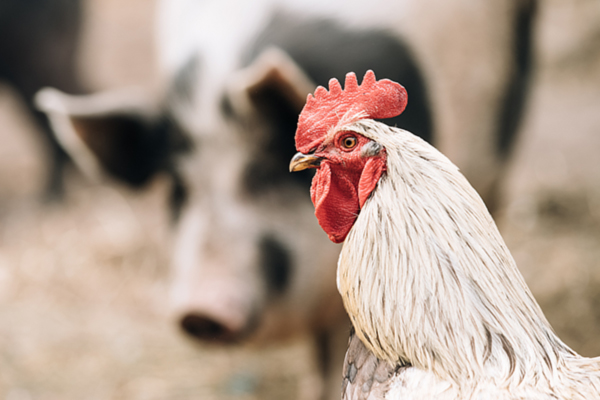
Beyond GM has joined a European groups in calling on the European Commission to retain strict regulation of genetically modified animals and resist industry pressure for a new deregulatory pathway for gene-edited livestock, fish, insects and other animals.
The joint letter, sent on 9 July to Commissioners Olivér Várhelyi and Christophe Hansen and Executive Vice-President Stéphane Séjourné, was signed by 42 organisations, including Compassion in World Farming, Eurogroup for Animals, World Animal Protection Netherlands, IFOAM Organics Europe, Greenpeace, Friends of the Earth Europe, the European Environmental Bureau, Slow Food and Beyond GM/A Bigger Conversation.
The intervention follows mounting evidence that animals will become the next target for gene-editing deregulation. Although the European Commission has not yet published a formal proposal, political and industry groundwork is already being laid. Animal breeders are increasingly treating the recently agreed EU legislation on new genomic techniques in plants as a precedent – or “door opener” – for changing the rules governing animals.
The pressure is not speculative. The European Forum of Farm Animal Breeders (EFFAB) described the plant NGT compromise in February as an “encouraging door opener” for animal breeding. Following the European Parliament’s vote on plants in June, the group called more directly for the Commission to begin work on a new framework for livestock.
Other actors associated with the push include Hendrix Genetics, the Roslin Institute and representatives of the aquaculture sector. The Commission’s livestock strategy has also identified “innovation in genetics” among technologies that might contribute to reducing emissions and helping agriculture adapt to climate change.
But a cross-party group of MEPs warned the Commission on 25 June that current development efforts remain focused largely on faster growth, increased muscle mass, higher yields, reproductive performance and adaptation to intensive farming systems.
Beyond GM director Pat Thomas said: “Animal welfare is already being positioned as the acceptable face of deregulation. We will be shown one apparently beneficial trait and asked to ignore the wider direction of travel: animals redesigned for greater output, uniformity and tolerance of intensive conditions.”
The central concern of the joint letter is that gene editing could be used to make animals more productive – or more capable of surviving damaging conditions – rather than improving the systems in which they are kept.
Decades of selection for rapid growth, very high yields, large litters and other extreme production traits have already contributed to lameness in broiler chickens, metabolic disorders in high-yielding dairy cattle, cardiovascular problems in fast-growing pigs and skeletal disorders across farmed species. Gene editing could accelerate these trends by enabling such traits to be introduced more quickly and widely.
Gene editing is also promoted as a means of producing disease-resistant animals, hornless cattle or pigs without tails. But these applications can distract from the underlying causes of disease and injury, including overcrowding, stressful housing, inadequate management, poor biosecurity and genetic uniformity.
Creating genetically engineered animal lines can also involve embryo manipulation, cloning, surrogate pregnancies and repeated invasive procedures. These processes may result in failed embryos, developmental abnormalities, health complications, laboratory animal use and the culling of unsuccessful animals – long before a commercially viable line is produced.
The joint letter’s message is straightforward: “Farmed animals should not be genetically modified to better tolerate inadequate systems.”
The debate is no longer wholly hypothetical.
In the United States, a gene-edited pig resistant to porcine reproductive and respiratory syndrome, or PRRS, has been approved for use in the food supply. Its developer, Genus, has also been pursuing approvals in Canada, Mexico, Japan and China. This is likely to become the industry’s flagship example because it allows gene editing to be presented as a welfare intervention rather than a productivity technology.
Japan has already allowed three fast-growing gene-edited fish into production and consumption after removing gene editing from GMO regulation and leaving labelling largely to producers. Aquaculture may therefore become an early route for gene-edited animals into the food system, particularly because fish welfare has historically received less political attention than the welfare of terrestrial livestock.
There are also wider ecological concerns. BeeLife and other beekeeping organisations have called for a moratorium on the genetic engineering of wild species, warning that the release of engineered organisms could create unquantified and potentially irreversible risks for pollinators, biodiversity and ecosystem integrity. Beyond GM has recently written about the impact of GM plants on honeybees – one of the world’s most intensively managed livestock species – and plans to re-engineer honeybees for disease resistance .
Signatories of the joint letter say they strongly oppose applying to animals a system comparable to the EU’s Category 1 NGT plant pathway, under which many gene-edited plants would be exempted from existing GMO risk assessment and consumer-labelling requirements.
Unlike many annual crops, genetic traits introduced into commercial animal-breeding populations could spread quickly and become difficult to reverse. The coalition therefore says case-by-case assessment, full supply-chain traceability and labelling of products derived from genetically modified animals are essential.
It is calling on the Commission to maintain rigorous authorisation and risk assessment for all genetically modified animals, including honey bees; require traceability and consumer labelling; exclude animals from any deregulatory system modelled on Category 1 NGT plants; prioritise better husbandry and farming conditions; and guarantee meaningful participation by civil society and independent experts.
The issue has direct implications for the UK. The Genetic Technology (Precision Breeding) Act 2023 already creates a legal framework for deregulating gene-edited animals. The necessary secondary legislation, we understand, as largely been drafted, though no date for its introduction has been given. given the controversies around the subject the UK is likely waiting to see what the EU will do next.
In the meantime, substantial preparatory work has taken place, including three government-commissioned animal-welfare research projects at Scotland’s Rural College. The immediate direction of UK policy may depend partly on whether the precision-breeding regime is protected through a carve-out from future UK–EU regulatory alignment. In the meantime, legislative change affecting research and development may be more likely than immediate approval for commercial marketing.
The British Veterinary Association has said gene editing should only be considered where it provides a clear and demonstrable health or welfare benefit. It also warns that the technology must not compensate for poor husbandry, overcrowding or lower welfare standards, and that every application should undergo ethical assessment.
Compassion in World Farming and the RSPCA both strongly oppose the gene editing of farm animals, warning that it could aggravate animal suffering and entrench intensive factory farming. While both organisations acknowledge a few hypothetical welfare-positive exceptions, such as disease resistance, they campaigned heavily against the UK Genetic Technology (Precision Breeding) Act because of serious ethical, welfare and safety concerns.
Beyond GM’s recent briefing, Gene edited livestock: UK policy context and global developments, concluded that unresolved questions around public trust, evidence gaps, welfare, trade alignment and policy development have delayed UK implementation. Only a small number of gene-edited animal projects are currently close to market internationally, and UK-specific commercialisation is not expected before 2027.
Thomas said: “Europe still has an opportunity to draw a clear line. Animals must not become the next experiment in removing risk assessment, traceability and public choice. Better farming means changing the conditions in which animals live – not genetically changing animals so those conditions can remain.”

From A Bigger Conversation
The Director General of MI5 has warned that artificial intelligence could change the stake…
From A Bigger Conversation
What do I need to say to make you feel more positive about GE food? One developer’s ques…
From A Bigger Conversation
Digital agriculture is often sold as inevitable progress, but behind the "cloud" lie corpo…
From A Bigger Conversation
The use of artificial intelligence tools is among the top emerging issues in biodiversity…

Share this page
share using:
Or copy and paste this page address:
https://beyond-gm.org/rising-calls-for-strict-regulation-of-gene-edited-animals/