November 12, 2026 by Pat Thomas and Ayms Mason
Plant a pip from a Cox’s Orange Pippin and you won’t get another Cox. You’ll get a seedling with a new mix of genes. Its apples may look and taste quite different.
To reproduce the original Cox, a nursery takes a bud or shoot from an existing tree and grafts it onto a rootstock. The fruit-bearing part of the tree belongs to a line of plants copied from the original for around two centuries.
Growers copy many other fruits (and nuts) in similar ways. Strawberry plants send out runners that take root and form new plants. Grapevines can be grown from cuttings. These are all ways of producing copies, or clones, of a single variety. The word clone in this instance has nothing to do with gene editing. It comes from the Greek for twig and just means a plant grown from a cutting. For fruits like bananas clones are often multiplied from small pieces of plant tissue grown in a laboratory and then planted out.
However it’s done, the result is the same – an exact copy of the original plant.
New fruit varieties of fruit often arise by accident. Occasionally a branch on an apple tree produces fruit that looks different from the rest. These are called “sports.”
A branch on a Gala tree might produce redder apples, for example. A nursery can graft that branch onto rootstock and, if the difference holds, the resulting apples may become a new commercial variety. Deliberately speeding up mutation, for example by irradiating buds, is also common practice. Fruit growers have long worked in this way.
That makes fruit different from vegetables and arable crops which are grown from seeds. It also presents challenges to England’s precision breeding regime that have not yet been addressed.
In July this year, Defra confirmed the precision bred status of two fruits: a gene-edited banana and eight lines of gene-edited strawberry. These are the first such fruits to be confirmed in England.
But as edited fruit plants begin moving between labs, nurseries and farms, will anyone be able to tell which ones they are?
In 2023, the Genetic Technology Act created a category called “precision bred” for certain genetically modified plants whose changes, under the law’s definition, could have arisen through traditional processes. A developer can obtain confirmation of that status and then apply separately for permission to market the crop as food.
The Act, which applies to England only, was passed before all the regulatory framework was in place and many of the gaps that existed then remain unaddressed.
In March 2025, new regulations for experimental field trials and food marketing were brought in under the Act.
Around the same time, Defra held a consultation on integrating precision-bred plants into the National Variety list. The proposals included labelling precision bred seed at point of sale and a separate precision bred organism (PBO) variety list. The consultation document only covered the major agricultural crops included on the National list. It specifically noted that fruit is regulated differently and that altering the fruit regime would require new regulations.
No action has yet been taken on either the variety list recommendations or the fruit regulations.
In the meantime, Beyond GM brought a judicial review against the new Regulations and, in June 2026, the High Court ruled that England’s precision breeding regulations had been made unlawfully. The minister had been wrongly advised about his powers and, as a result, did not make provisions for labelling and traceability of precision bred foods in the food supply chain.
At the time of writing, the Court has yet to decide the remedy and applications, including for fruit, were still progressing even though the framework remains incomplete and unlawful.
Our new report looks specifically at the problem of clonally produced fruit in relation to the Genetic Technology Act and Regulations. The picture is complex.
The 2017 rules on selling fruit plants still have no specific provisions for precision-bred plants.
They mandate that a genetically modified variety needs authorisation for cultivation to join the official fruit variety register. They also provide for GM declarations on official labels and in the paperwork that accompanies fruit through the supply chain. Defra has yet to clarify whether those requirements will also apply to plants confirmed as precision bred and, if they do, how these requirements will be met. The variety register, for instance, has no field for recording how a plant was bred.
Among the fruits being considered by the Food Standards Agency is a gene edited strawberry produced by Simplot. Its marketing notice covers eight strawberry lines edited to extend their flowering and harvesting season. The notice says the English trials will include “value chain consultation and taste testing” to select lines for future production and fresh-fruit marketing. It does not say if the strawberries will undergo any additional field testing.
The notice gives no name for the original variety, and says commercial cultivation and marketing will follow once line selection is completed and the lines have been registered for production in England. But it does not identify the registration route or explain whether the edited lines will be treated as new varieties, or as the parent variety with an altered trait.
Defra has assigned a reference code to each line. Individual codes could help nurseries and growers identify the plants, provided they appeared on the labels or paperwork that travel with them. If they do not, there is currently no public information buyers can use to work out whether the plants in front of them match any of the entries.
In terms of safety, Simplot reported that the intended edits (e.g. longer flowering time) remained stable through three rounds of copying. It reported checking just one place in the plants’ DNA where an unintended edit might have occurred. If an unwanted change is present somewhere else in the genome, we won’t know about it. Because the strawberries are clones, any unknown changes will be replicated in all the plants copied from it. Despite this, neither the government nor the FSA has asked for more information.
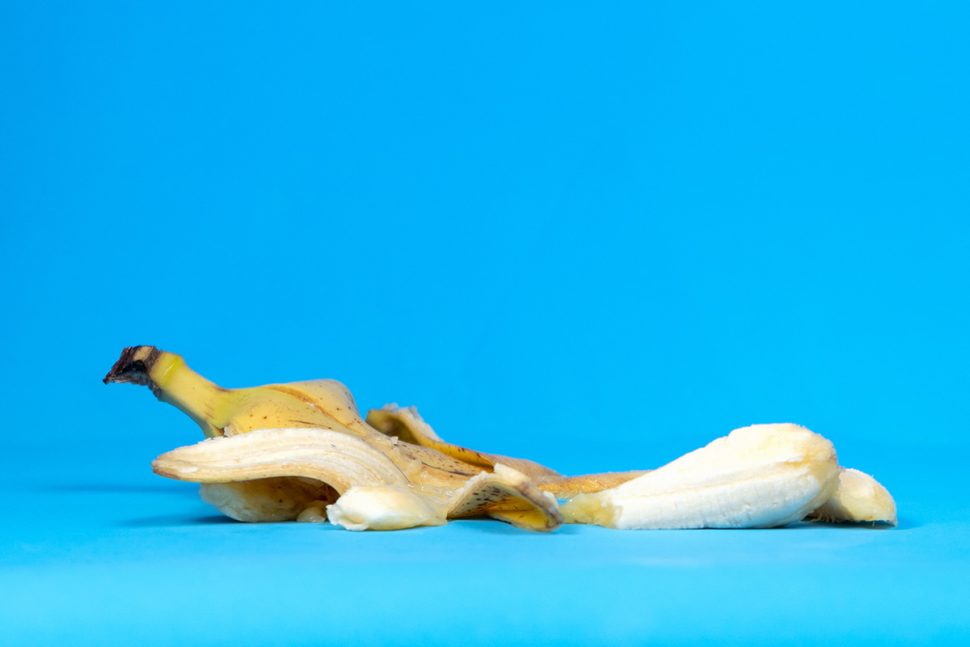
Tropic’s reduced-browning bananas would be grown overseas and imported as whole fruit for eating. The English rules for selling fruit plants don’t apply in this instance. Our research on fruit varieties and fruit clones has found no published method that a port inspector or local authority could use to verify that the fruit is Tropic’s gene edited banana. The unlabelled, imported banana cut up into a fruit salad, or blended into a smoothie, or offered up at school breakfast clubs could be gene edited – or not.
Geneticist Prof Michael Antoniou has expressed concern about how the government has managed the banana’s marketing notice. Tropic sequenced the DNA of both the original and the edited banana but, according to Antoniou’s analysis, did not compare the two directly. The government’s scientific advisers enquired about unintended effects, but instead of insisting on data from the actual bananas, accepted evidence from a previously published study on rice. A direct comparison would have helped establish what actually changed in the banana that will enter our food system.
Neither fruit is available for sale yet. Production of the banana is being scaled up in countries like Brazil, Colombia, Costa Rica, Ecuador, the Philippines and Israel. The strawberries have not even entered the field-testing stage. Nevertheless, at the time of writing, both fruits were progressing through the Food Standards Agency’s approval process for food and feed authorisation. The Agency’s register records that a safety assessment is “not required” for either application.
Under the deregulatory English regime, developer self-certification is the primary assurance and a food authorisation is unlikely to be challenged or refused.
But a food authorisation does not address how, for example, a nursery identifies the strawberry plants it supplies or how an importer or retailer identifies the bananas it sells.
Suppose someone edits a Cox apple and submits it for variety testing. If the edit changes a feature used to distinguish a particular variety, the plant could be recognised as a new variety and would need a new name. If the edit leaves the features assessed in those tests – e.g. how a plant behaves, such as when it flowers, or what it looks like – unchanged, the plant might still be treated as Cox. Either way, a variety name alone does not give a buyer a reliable way to tell whether the plant has been gene edited.
Grapevines, which sit outside England’s fruit plant rules, bring that problem into focus. Centuries of natural mutation mean “Pinot Noir” is sometimes said to have thousand registered “clones,” each with different vigour, yield and flavour. Pinot Gris and Pinot Blanc, for example, are colour mutations of Pinot Noir. They share the same genome, the only difference is a change affecting the genes controlling their colour. However, since the difference is visible, they’re treated not as clones, but as separate varieties.
A vine edited for disease resistance might still resemble the familiar variety and yield wine with the qualities people expect. But where would that vine fit in terms of regulation and varietal identification? Grapevines in England are subject to plant health controls, but we could find no equivalent to the EU’s system for identifying vine varieties and clones sold to growers.
The EU’s new gene-editing rules, which will apply from July 2028, require labels and identification numbers on planting material approved under its more lightly regulated Category 1 regime. That includes cuttings as well as seed. But shoppers buying the resulting fruit will still face a gap, because the requirement applies to planting material – not the final fruit sold to consumers. For the English regime, the government has yet to explain how comparable information would reach even the people buying the plants.
Gene editing is a type of genetic modification.
The Genetic Technology Act of 2023 removed gene-edited “precision bred” organisms from existing GMO regulations. Parliament disapplied the GM rules in fourteen named laws, but the fruit variety rules weren’t among them. So on Defra’s own terms, precision bred fruit plants are still governed by GM laws. As our new report reveals, there are some loopholes that gene edited fruit can slip through. Rather than creating clarity, these only make the regulatory position murkier and harder to navigate.
Better traceability and labelling would help inform supply chains. Organic growers and certifiers are legally required to keep all GMOs, including gene edited “precision bred” GMOs, out of their supply chains. Scotland and Wales have not adopted the English regime, so farmers, growers and businesses there also need to know how to trace these organisms, which are still regulated as GMOs in these countries.
For those who must or want to avoid PBOs, knowing what is being planted or imported, where it came from and what evidence supports its assessment is a non-negotiable requirement.
But traceability on its own doesn’t answer an equally big concern: Is a gene edited fruit a different variety?
Fruit varieties are unusual in that their names speak to tradition and continuity. “Cox’s Orange Pippin” isn’t a brand or a trademark. It’s a claim about lineage: that this plant is a copy of a single tree first planted in Buckinghamshire in the 1830s. Two centuries of grafting have upheld the truth of that claim.
The English regime, therefore, raises two different but related – and unanswered – questions around identity.
If Defra has certified precision bred fruits as suitable for marketing and import and the FSA is assessing precision bred fruits for sale and consumption right now, then nurseries, food businesses, supermarkets, caterers and restaurants need to be preparing right now for how they will identify gene edited fruits in their supply chains and how they will communicate the presence or absence of gene edited fruit in their products.
But right now, the flow of information necessary to meet the needs of growers, businesses and consumers is not happening.

From A Bigger Conversation
The Director General of MI5 has warned that artificial intelligence could change the stake…
From A Bigger Conversation
What do I need to say to make you feel more positive about GE food? One developer’s ques…
From A Bigger Conversation
Digital agriculture is often sold as inevitable progress, but behind the "cloud" lie corpo…
From A Bigger Conversation
The use of artificial intelligence tools is among the top emerging issues in biodiversity…

Share this page
share using:
Or copy and paste this page address:
https://beyond-gm.org/the-problem-of-precision-bred-fruit/